Safety and Environmental Impacts
In terms of safety, he noted that AI contributes via early warning systems that predict roof collapses, methane gas emissions, or explosions. The deployment of robotics and autonomous vehicles prevents miners from entering
hazardous areas or toxic atmospheres.
Furthermore, AI-powered cameras identify risk scenarios in real time and trigger immediate evacuation protocols to protect human life.
AI also delivers positive impacts by optimizing energy consumption in high-expenditure processes, such as loading and hauling, crushing, and smart ventilation. It reduces the environmental
footprint by monitoring air and water pollutants, alongside improving waste
management.
Moreover, it drives resource sustainability by increasing precision in ore grade estimation, which minimizes the loss of valuable materials.
Additionally, it reduces costs by minimizing catastrophic failures through predictive diagnostics that lower emergency repair expenses. It optimizes fuel and power consumption during material haulage and processing, decreases costs associated with accidents and downtime, and enhances supply chain and logistics management to eliminate waste and excess inventory. To adapt to this digital transformation, mining professionals must develop core competencies in data science and algorithmic analysis to manage machine learning models. Knowledge of remote monitoring tools, robotics, and Digital Twins is vital.
“Likewise, they require interpersonal skills to collaborate in multidisciplinary environments, alongside the technical capabilities needed to operate and maintain complex digital systems.”
Technical and Operational Challenges
Rentería Piérola pointed out that, from a technical standpoint, the greatest challenge lies in data quality and availability—as data is often unstructured or incomplete—as well as the difficulty of integrating modern technologies with legacy or obsolete systems.
From an operational standpoint, the dynamic and unpredictable environment of the mine complicates the deployment of autonomous systems, and signal transmission in deep underground mines remains a critical bottleneck.
Within this context, digitalization introduces vulnerabilities that can be exploited to disrupt critical operations or breach valuable information.
Therefore, the challenge, he noted, is to implement robust, real-time protective measures to detect and mitigate cyber threats. Additionally, large-scale data collection raises substantial concerns regarding data privacy and regulatory compliance.
Strategic Mining
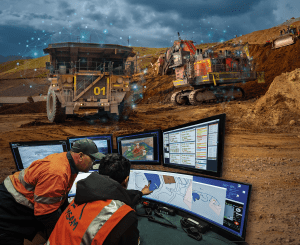
MS4M is a company specialized in developing technological solutions for the mining industry, focused on enhancing operational safety, efficiency, and productivity. With over thirteen years of experience working directly with mining operations across multiple countries, the company combines field operational expertise with specialized software and hardware engineering.

Richard Sandro Balboa Zegarra, General Manager for LATAM at MS4M
“Our value proposition is based on developing technological platforms that monitor, analyze, and optimize critical mining processes through the use of real-time data, connectivity, and advanced analytics,” emphasized Richar Sandro Balboa Zegarra, General Manager for LATAM at MS4M.
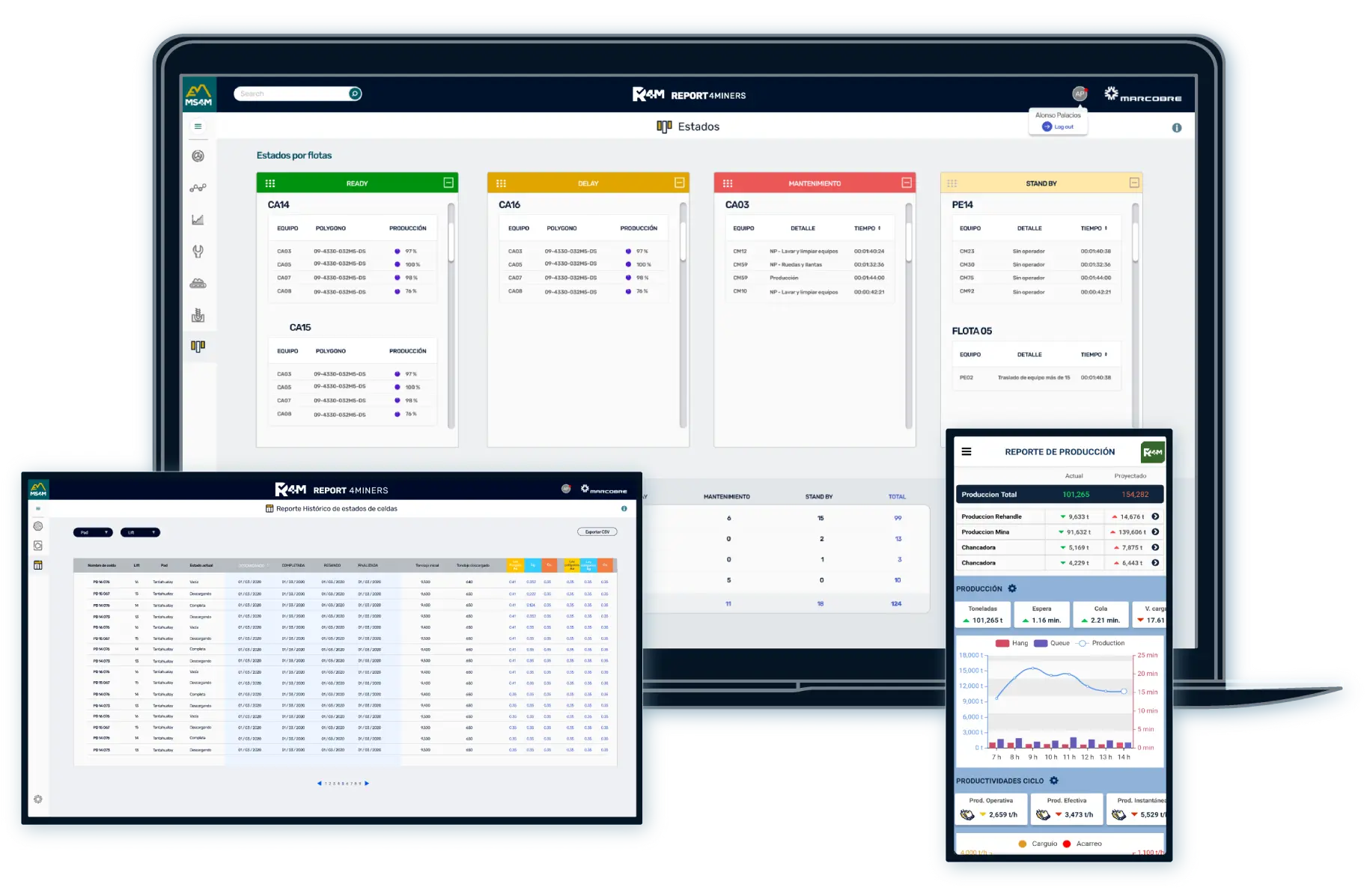
The company develops an operational mine management technology suite called The Mining Suite, which integrates software and hardware platforms for the monitoring and optimization of mining processes. Standing out among its solutions is C4M (Control 4Miners), designed for fleet management and cycle control of loading and hauling operations in both open-pit and underground environments.
The ecosystem also includes:
• R4M (Report 4Miners): For operational analytics and KPI generation.
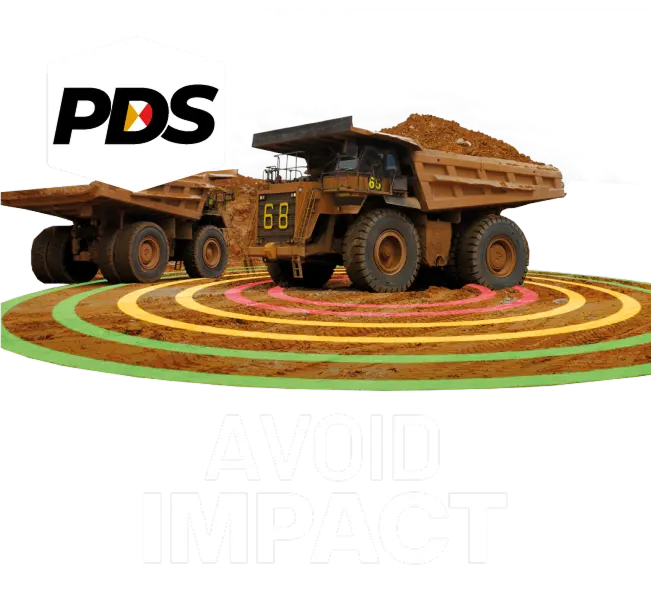
• S4M (Safety 4Miners): Geared toward operational safety.
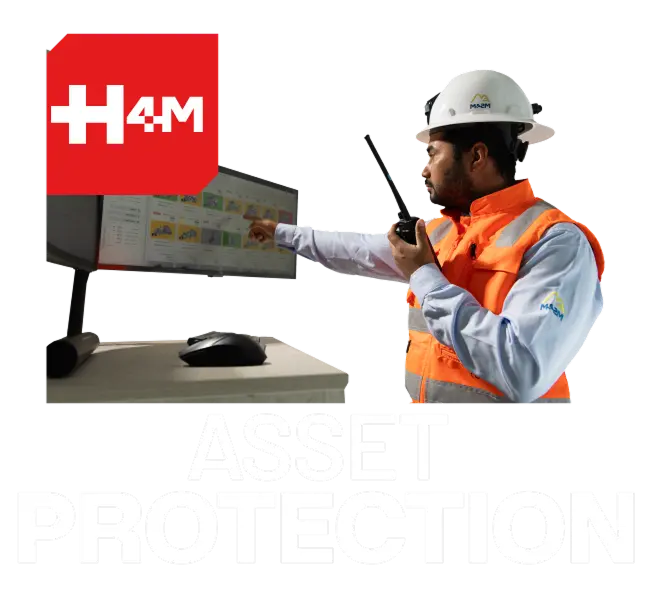
• H4M (Health 4Miners): For asset health and equipment monitoring.
“These solutions integrate data from sensors, equipment, and operational systems to deliver real-time visibility into the operation, facilitating decision-making backed by reliable information,” Balboa specified.
In systems like C4M, for instance, optimization models can assess mine variability, detect bottlenecks, improve equipment allocation, and optimize haulage routes.
The company sets itself apart by offering solutions engineered by industry professionals. Utilizing reinforcement learning, machine learning, and computer vision, its ecosystem analyzes data to optimize routes and assignments in real time.
“MS4M transforms pit-level data into strategic decisions that drive productivity, reduce costs, and elevate safety standards, positioning the company at the forefront of modern mining.”
Proven Track Record (Success Cases)
Among their success stories, Balboa Zegarra highlighted a mining operation in Argentina, where the implementation of the FCS (Fatigue Control System) successfully prevented more than ten high-potential incident events caused by operator fatigue. Similarly, at an operation in Peru, the C4M UG (Control 4Miners Underground) platform contributed to a production increase of over 20% while maintaining rigorous operational safety standards.
Looking ahead, the General Manager projected that over the coming years, the convergence of technologies such as AI, advanced analytics, and digital twins will be decisive in optimizing highly complex operational ecosystems. However, the strategic value of these tools transcends mere data capture; their true power lies in generating operational intelligence for real-time prescriptive decision-making.
“Those organizations capable of successfully bridging technological infrastructure with the rigor of expert knowledge will cement their position as the industry benchmarks for competitiveness,” he concluded.